
EQUITY SHARE INVESTMENTS
Explore Equity Share Investment Opportunities.
Equity shares represent ownership in a company and allow investors to participate in its potential growth. By investing in shares, you may benefit from capital appreciation and dividends when declared by the company.
Equity investments can offer long-term growth opportunities, but share prices fluctuate with market conditions, company performance and economic factors. Understanding your financial goals, investment horizon and risk tolerance is important before investing.
Types of Equity Market Investments
Equity Shares
Represent ownership in a company and may offer capital appreciation and dividends.
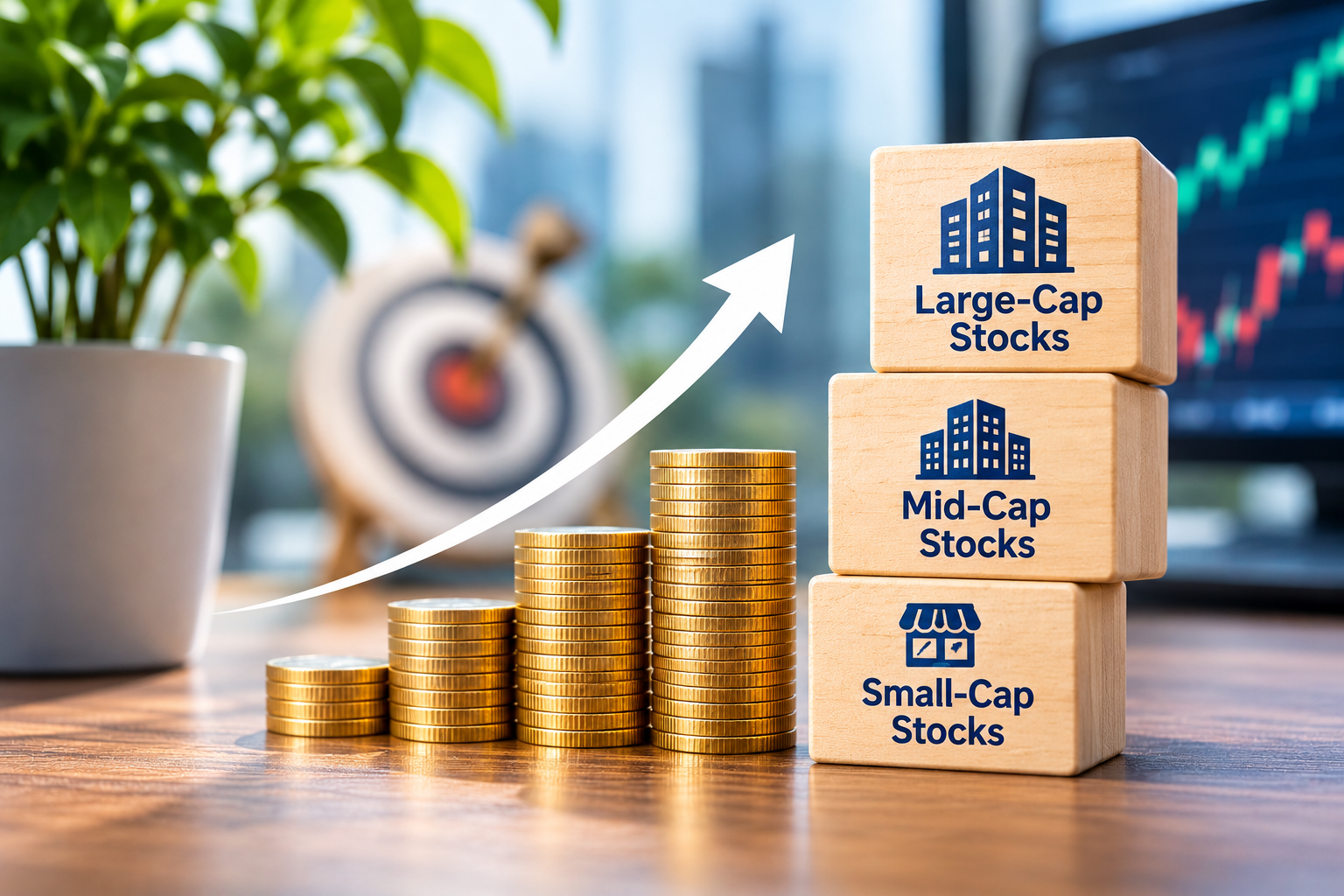
Large-Cap Stocks
Shares of large, well-established companies with strong market presence.
Mid-Cap Stocks
Shares of medium-sized companies that may offer growth opportunities alongside market risks.
Small-Cap Stocks
Shares of smaller companies that may experience greater price fluctuations and liquidity risks.
Futures and Options
Explore Futures and Options Investment Opportunities.
Futures and options are derivative contracts whose value is based on an underlying asset, such as stocks, indices, commodities or currencies. These contracts allow traders and investors to hedge market exposure, manage price risks or take positions based on expected market movements.

Types of Derivative Contracts
Futures Contracts
A futures contract is an agreement to buy or sell an underlying asset at a predetermined price on a specified future date. Both parties are obligated to fulfil the contract as per its terms and agreed conditions.
Options Contracts
An options contract gives the buyer the right, but not the obligation, to buy or sell an underlying asset at a predetermined price on or before a specified expiry date. The option seller has corresponding obligations under the contract.
Frequently Asked Questions
Equity Shares Investment – FAQs
Find quick answers to common questions about equity shares, futures contracts, options trading, investment strategies, and associated market risks.
Equity shares represent ownership in a company. Shareholders may benefit from capital appreciation and dividends, if declared by the company. However, share prices fluctuate with market conditions.
Equity shares offer potential long-term growth, dividend opportunities and partial ownership in companies. They can also help diversify an investment portfolio, depending on your financial goals and risk tolerance.
Futures and options are derivative contracts whose value depends on an underlying asset, such as stocks, indices, commodities or currencies. They are used for hedging, trading and managing market exposure.
A futures contract obligates both parties to buy or sell an underlying asset at an agreed price on a specified future date. An options contract gives the buyer the right, but not the obligation, to buy or sell the asset under specified terms.
Futures and options involve complex strategies, leverage and significant market risks. Beginners should understand how these contracts work, learn about potential losses and assess their risk tolerance before participating.