
AIF – Alternative Investment Fund
Explore Alternative Investment Fund (AIF) Opportunities.
An Alternative Investment Fund (AIF) is a privately pooled investment vehicle established or incorporated in India. It collects funds from Indian or foreign investors, including sophisticated investors, and invests them according to a defined investment policy for the benefit of its investors.

Categories of Alternative Investment Funds
Alternative Investment Funds in India are broadly classified into three categories under SEBI regulations:
Category I AIF
Funds that invest in businesses and sectors considered socially or economically desirable, such as start-ups, early-stage ventures, infrastructure and other specified sectors.
Category II AIF
Funds that do not fall under Category I or III and generally avoid leverage, except for borrowing permitted under SEBI regulations. Examples include private equity, debt and real estate funds.
Category III AIF
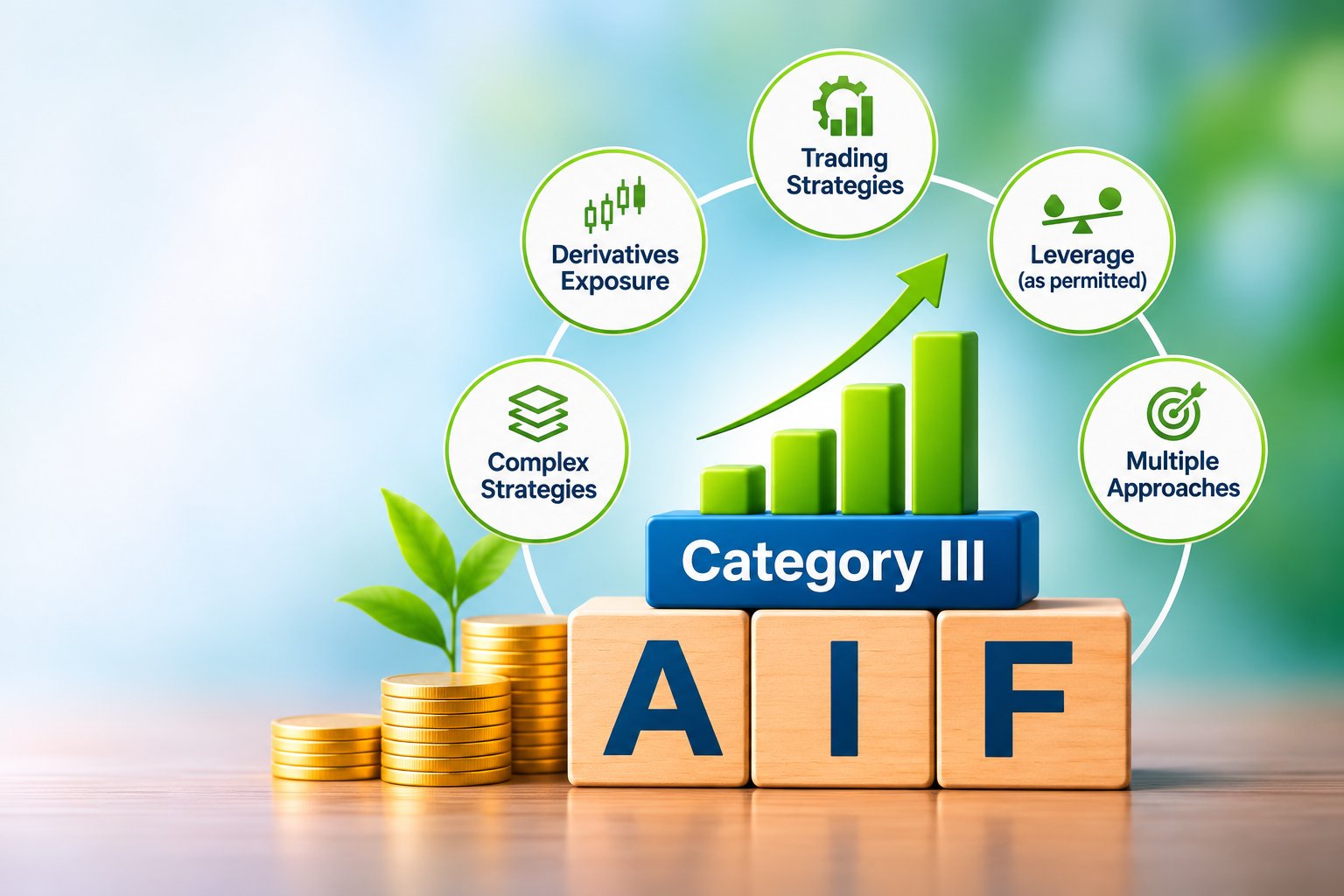
Funds that use diverse or complex trading strategies and may employ leverage, including through investments in listed or unlisted derivatives. Examples include hedge funds and other strategy-based funds.
CATEGORY II ALTERNATIVE INVESTMENT FUNDS
Explore Category II Alternative Investment Funds.
Category II AIFs are funds registered under the SEBI (Alternative Investment Funds) Regulations that do not fall under Category I or Category III. They generally do not use leverage, apart from permitted borrowing for day-to-day operational requirements and other circumstances allowed by applicable regulations.
These funds may invest in businesses, private equity, debt securities, real estate and other permitted investments, depending on their investment objectives and strategy.

Common Types of Category II AIFs
Private Equity Funds
Invest in private companies to support business growth and expansion.
Debt Funds
Invest in debt instruments issued by companies and eligible borrowers.
Real Estate Funds
Invest in property assets and real estate-related opportunities.
Fund of Funds
Invest in other funds to gain exposure to different investment opportunities.
CATEGORY III ALTERNATIVE INVESTMENT FUNDS
Explore Category III Alternative Investment Funds.
Category III AIFs are privately pooled investment vehicles that employ diverse or complex trading strategies and may use leverage, including through investment in listed or unlisted derivatives, as permitted under the applicable regulatory framework.
These funds may pursue returns through strategies involving equities, derivatives and other permitted instruments. Their performance depends on market conditions, the investment strategy and the fund manager’s decisions.
Common Types of Category III AIFs
Long-Short Strategies
These strategies combine long and short positions based on market outlook and investment objectives.
Derivatives-Based Strategies
These strategies use futures and options to gain market exposure, manage risks or pursue trading opportunities.
Market-Neutral Strategies
These strategies balance selected positions to reduce the impact of broad market movements.
Multi-Strategy Funds
These funds combine different investment and trading strategies within a single portfolio.
Frequently Asked Questions
Alternative Investment Funds – FAQs
Find quick answers to common questions about Alternative Investment Funds (AIFs), Category II and Category III AIFs, investment strategies, fund structures and associated investment risks.
An Alternative Investment Fund (AIF) is a privately pooled investment vehicle that collects funds from investors and invests them according to a defined investment strategy. AIFs are regulated by SEBI in India.
AIFs are classified into three categories under SEBI regulations: Category I invests in sectors considered socially or economically desirable, Category II includes private equity and debt funds, and Category III follows complex trading strategies and may use leverage.
Category II AIFs include private equity funds, debt funds and real estate funds. They generally do not use leverage, except for borrowing permitted under applicable SEBI regulations.
Category III AIFs use diverse or complex investment and trading strategies. They may invest in listed or unlisted securities, derivatives and may employ leverage as permitted by SEBI regulations.
Yes. Both categories involve investment risks, including market, credit and liquidity risks. Category III AIFs may also involve additional risks due to complex strategies, derivatives and leverage. Returns are not guaranteed, and investors should review the fund documents before investing.