
Mutual Funds
Explore Mutual Fund Investment Opportunities.
Mutual funds allow investors to pool their money into a diversified portfolio of securities managed by professional fund managers. Whether your objective is long-term capital growth or convenient investing, mutual funds offer various investment options to suit different financial needs.
Equity Funds :An equity fund is a mutual fund that primarily invests in company stocks. There are several types of equity funds, including:
- Diversified Funds
- Index Funds
- Multi-Cap Funds
- Small-Cap Funds
- Large-Cap Funds
- Mid-Cap Funds
- Sectoral and Thematic Funds

Equity Mutual Funds – Loan Facility
Get a loan of up to 50% of the Net Asset Value (NAV) of eligible mutual fund investments, subject to lender eligibility, valuation and applicable terms and conditions.
Debt Mutual Funds
Explore Debt Mutual Fund Investment Options.
Debt funds are a type of mutual fund that aim to generate returns by investing in bonds, deposits and other fixed-income instruments. They may be suitable for investors who prefer relatively lower-risk investment options compared to equity funds.
Debt mutual funds primarily invest in fixed-income securities such as government securities, corporate bonds and other debt instruments with different maturity periods.
Types of Debt Funds
- Monthly Income Plans (MIPs)
- Fixed Maturity Plans (FMPs)
- Income Funds
- Gilt Funds

Debt Mutual Funds / FMPs – Loan Facility
Get a loan of up to 80% of the Net Asset Value (NAV) against eligible debt mutual fund investments, subject to lender eligibility, valuation and applicable terms and conditions.
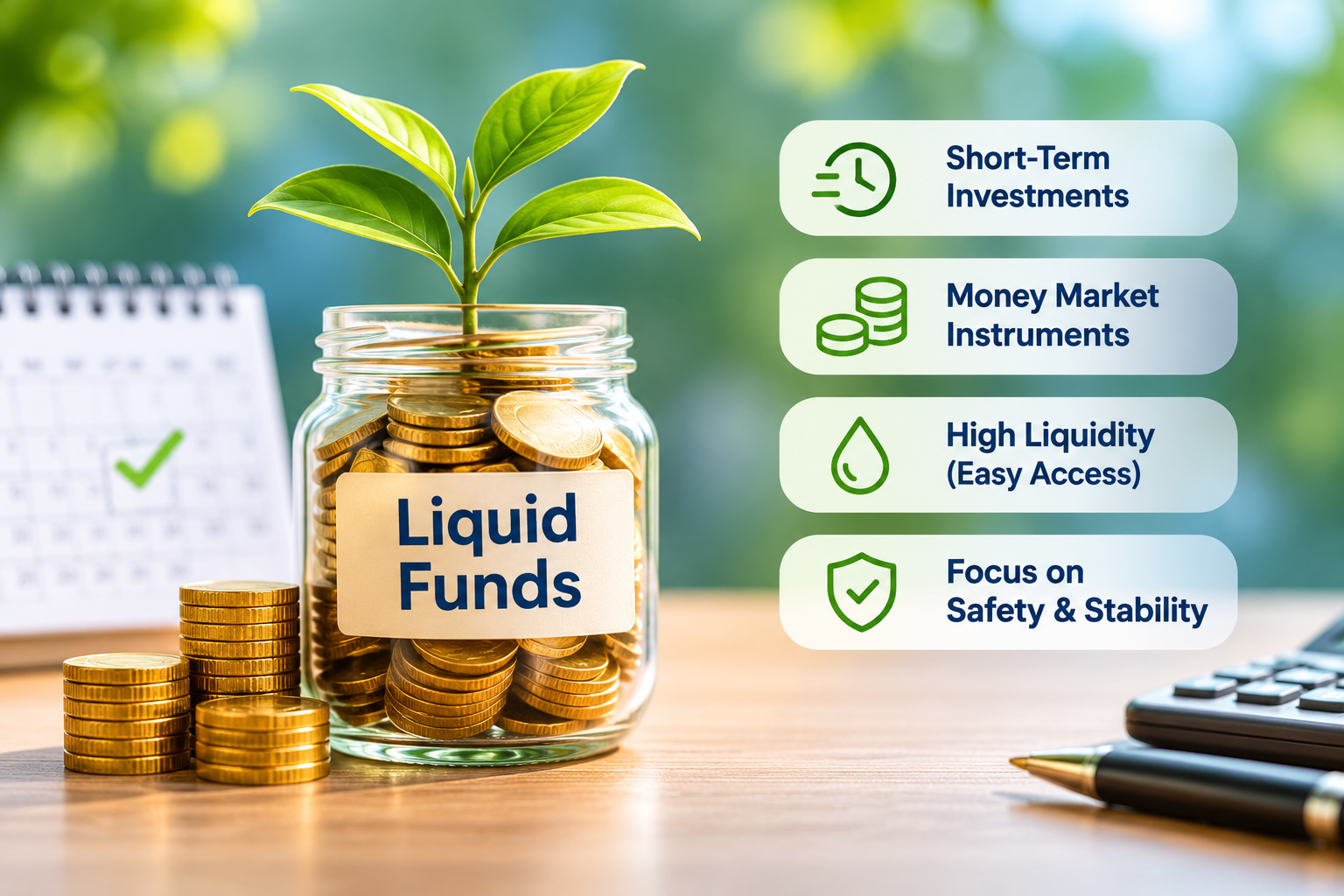
Liquid Funds
Flexible Short-Term Investment Options.
Liquid funds are a category of debt mutual funds that primarily invest in short-term money market instruments, such as certificates of deposit, treasury bills, commercial papers and term deposits.
These funds invest in securities with short maturities, helping fund managers manage liquidity and meet investors’ redemption requests. Liquid funds aim to provide easy access to invested money while focusing on liquidity and relatively low interest-rate risk. However, they are subject to market and credit risks.
Frequently Asked Questions
Mutual Funds – FAQs
Find answers to common questions about mutual funds, SIP investments, fund types, returns, NAV, risks and how to get started with mutual fund investing.
Mutual funds are investment schemes that pool money from multiple investors and invest it in assets such as equities, bonds and money market instruments. These investments are managed by professional fund managers according to the scheme's objectives.
When you invest in a mutual fund, you receive units based on the applicable Net Asset Value (NAV). The fund invests the pooled money according to its investment objective, and the value of your investment changes with the performance of its underlying assets.
Mutual funds are available in different categories, including equity funds, debt funds, hybrid funds, index funds, sectoral funds, and solution-oriented funds. Each category has different investment objectives, risk levels and investment horizons.
The minimum investment amount varies by mutual fund scheme and investment method. Some schemes allow investors to start with relatively small amounts through SIPs or lump-sum investments. Check the scheme documents for the applicable minimum.
Certain mutual fund categories, particularly equity-oriented schemes, may be considered for long-term goals depending on an investor's risk tolerance. Debt and hybrid funds may serve different financial needs. Choose investments based on your individual circumstances and investment horizon